A house for what the land already knows.
Two of the world's great origins are also two of its most anonymous exports. House of Origin exists to put the names back on.
World-class at origin. Anonymous by the time it is sold.
The same thing happens to both products.
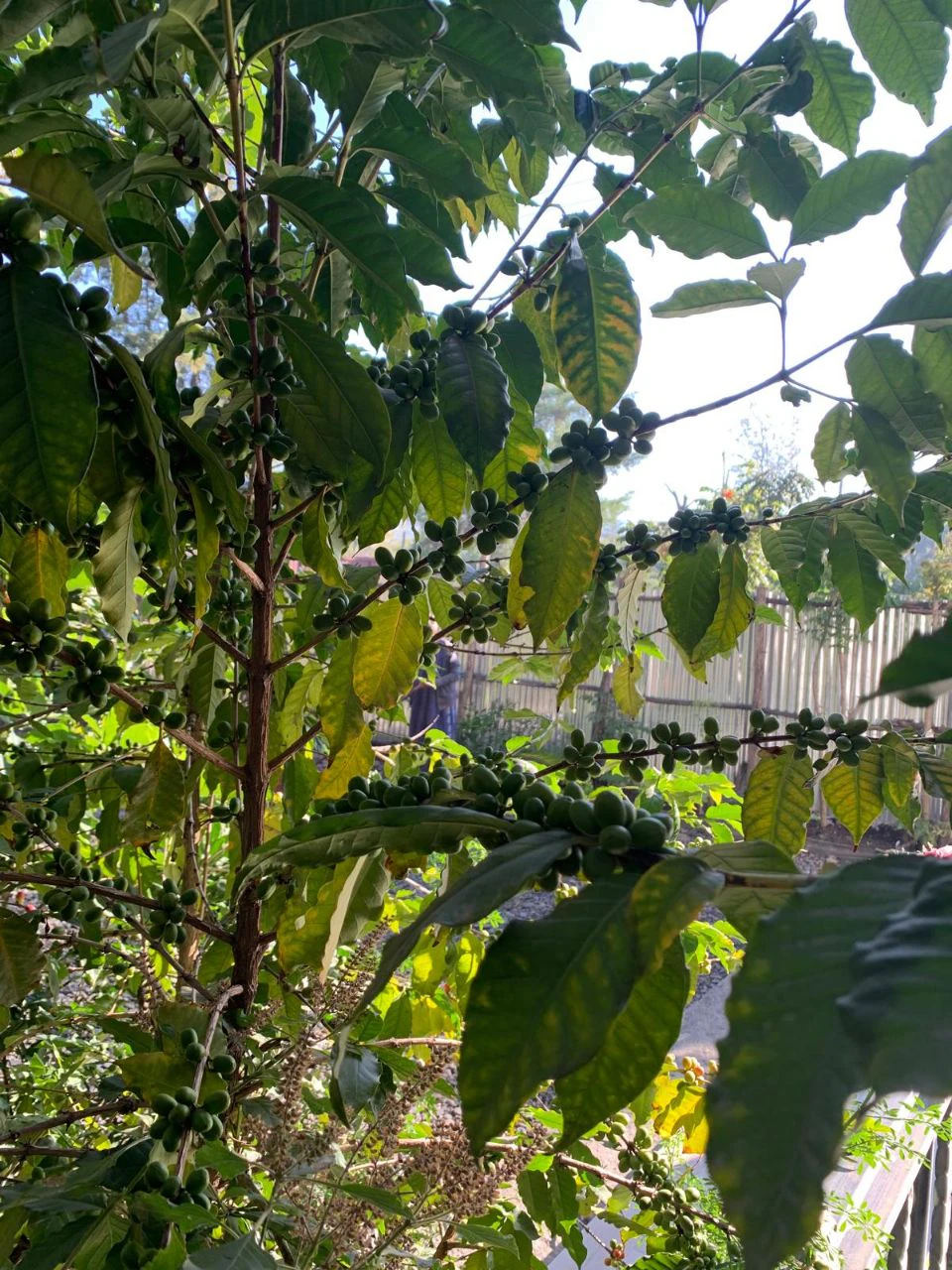
Ethiopia is Africa's largest coffee producer and the botanical home of arabica. Tunisia is among the world's largest olive-oil producers. In both cases, most of the crop leaves the country without its own name on it.
Ethiopian coffee is commonly traded as a national grade, so the washing station that made the difference disappears into a country of origin. Tunisian oil has for decades left in bulk to be blended and bottled elsewhere, under someone else's label. The farmer takes the price of a commodity; the label takes the margin of a brand.
Neither of those is a scandal. It is simply how commodity trade works — anonymity is what makes goods interchangeable. But it also means the thing worth paying for arrives without the information that would justify the price.
Keep the record attached.
We buy small, traceable lots and carry their information all the way to the table — the place, the people, the processing decisions, the laboratory proof and the tasting.
That is the whole business. It is not a claim about ethics; it is a decision about what information travels with the product. Everything else on this site — the atlas, the specifications, the Origin Passport — is machinery for keeping that record intact.
Read the StandardLand → People → Product → House → You.
Five links. Each one is somewhere information is normally lost.
Land
Altitude, soil, rainfall and variety set the ceiling. Nothing further down the chain can raise it.
People
Picking, fermentation, drying and pressing decide how much of that ceiling survives. This is where craft actually lives.
Product
The bag or bottle records those decisions instead of hiding them behind a brand name.
House
We verify, taste, cup and refuse. Buying is the easy half; declining is the standard.
You
You get the result and the record — enough to ask for the same lot again, or to say precisely why you would not.
The House — coming to Addis Ababa.
A tasting, education, retail and hospitality room. Address and bookings will be published when they are real — announced here and to the House list first.
Three habits, in place of a manifesto.
Name the ground
Region, station or estate printed on the pack. A country is not an origin, and “single origin” without a name is a phrase, not a fact.
Publish the number
Altitude, acidity, polyphenols, cupping score, roast date. Where a number exists it goes on the label instead of an adjective.
Teach the taste
Atlas, flavour wheel, brewing and serving guidance. A customer who can taste precisely is the only durable defence of quality.
House of Origin is presented as a company rather than a personality. There is no founder portrait on this site because the producers are the people worth photographing.