Extra virgin.
Early harvest.
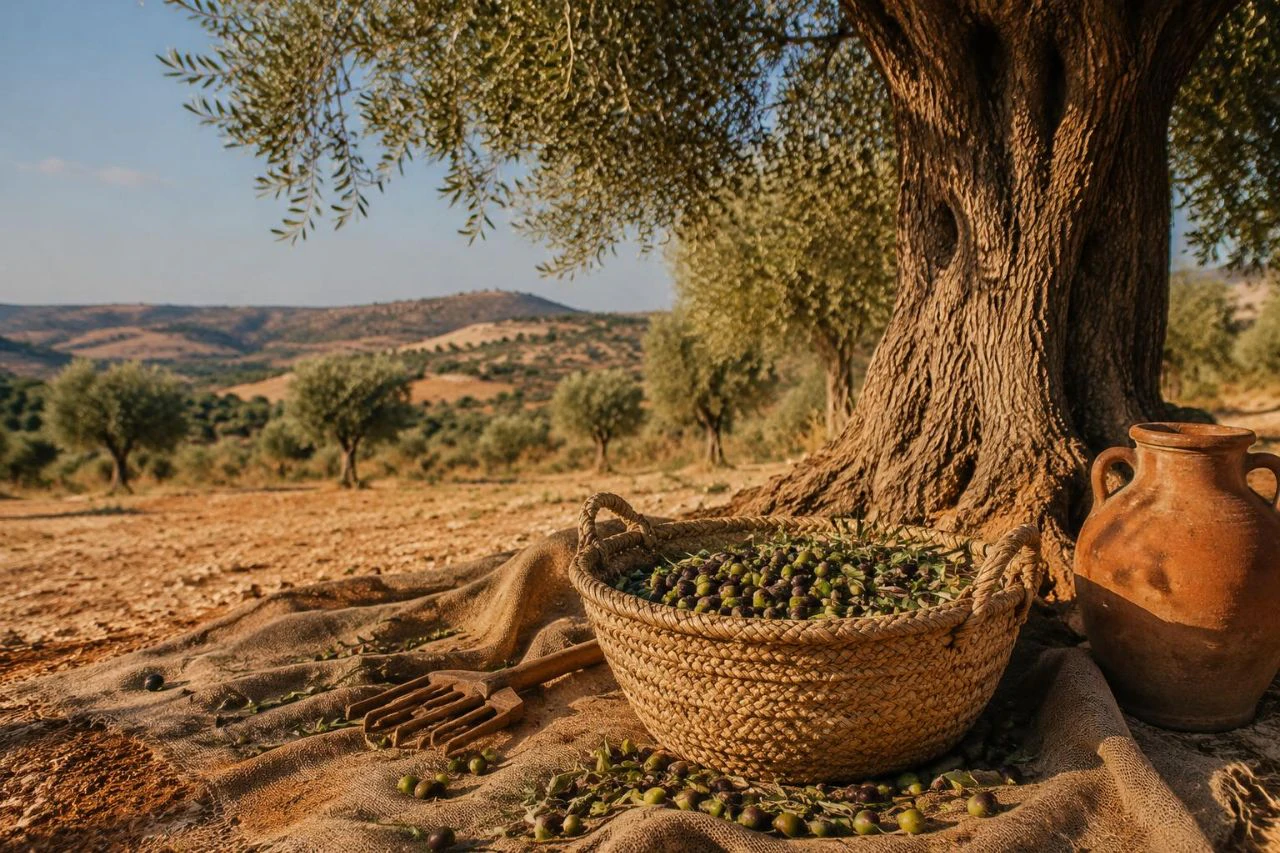
Chétoui and Chemlali olives, picked green, milled the same day, extracted cold. The quality is written as numbers on this page, not as adjectives.
Everything the bottle has to answer.
The full field list for this product. Where a figure depends on a signed grower agreement or a laboratory certificate we do not yet hold, the line says so.
Extra virgin is a legal floor, not a compliment.
Any oil that clears the column on the left may be sold as extra virgin. The column on the right is what this house asks for instead, tested by an accredited laboratory and released with the lot.
- Free acidity
- ≤ 0.80%Extra virgin limit
- ≤ 0.30%House target
- Peroxide value
- ≤ 20 meq O₂/kgExtra virgin limit
- ≤ 10 meq O₂/kgHouse target
- Polyphenols
- Not requiredExtra virgin limit
- ≥ 250 mg/kgHouse target
- K₂₇₀ absorbance
- ≤ 0.22Extra virgin limit
- Reported per lotHouse target
- Sensory panel
- Zero defectsExtra virgin limit
- Zero defects, fruitiness scoredHouse target
- Extraction
- Under 27 °C to state “cold”Extra virgin limit
- Under 27 °C, within 24 h of pickingHouse target
Why these four numbers matter
Free acidity measures how much the fruit had already broken down before it was milled. It is the clearest signal of whether olives were picked carefully and pressed quickly, or left in a heap for a week.
Peroxide value measures oxidation — how much air, heat and light the oil has already taken. A low figure at bottling is what gives an oil a life rather than a shelf date.
Polyphenols are the compounds behind the pepper at the back of the throat, and behind the oil's stability. The European health claim threshold is 250 mg/kg; early picking is the main way to reach it, at the cost of yield.
The sensory panel is a trained group tasting blind. Chemistry cannot detect a musty or fusty defect. People can.
Two Tunisian olives, two different oils.
Tunisia has roughly 1.8 million hectares under olive trees and is consistently among the world's largest producers. Almost all of it is one of two varieties.
North · structure and pepper
Grown mainly in the wetter north. Higher in polyphenols, which reads on the palate as green bitterness and a peppery finish, and in the bottle as a longer life. Picked early it is assertive; picked late it loses the thing worth having.
Centre and south · softness and almond
The dominant variety by volume, suited to dry ground. Milder, rounder, sweeter, with almond and ripe fruit rather than pepper. It makes the oil approachable for people who find a northern oil aggressive.
Our first bottling is built around Chétoui for structure, with Chemlali for roundness. The proportion is decided on the tasting table each harvest and printed on the lot, not fixed by a recipe.
Six decisions that make the oil.
None of these is expensive to describe and all of them are expensive to do.
Pick early
Green and part-turning fruit, October into December. Lower yield per tree, higher polyphenols, greener flavour.
Pick by hand and comb
Fruit that is not bruised does not begin to ferment on the way to the mill.
Mill within the day
Hours matter more than kilometres. Every hour between grove and mill shows up as free acidity.
Extract cold
Malaxation held under 27 °C. Warmer paste gives more oil and less of what you paid for.
Settle, don't strip
Gentle filtration for clarity and stability, without stripping the aromatics that made the early pick worthwhile.
Fill dark, fill full
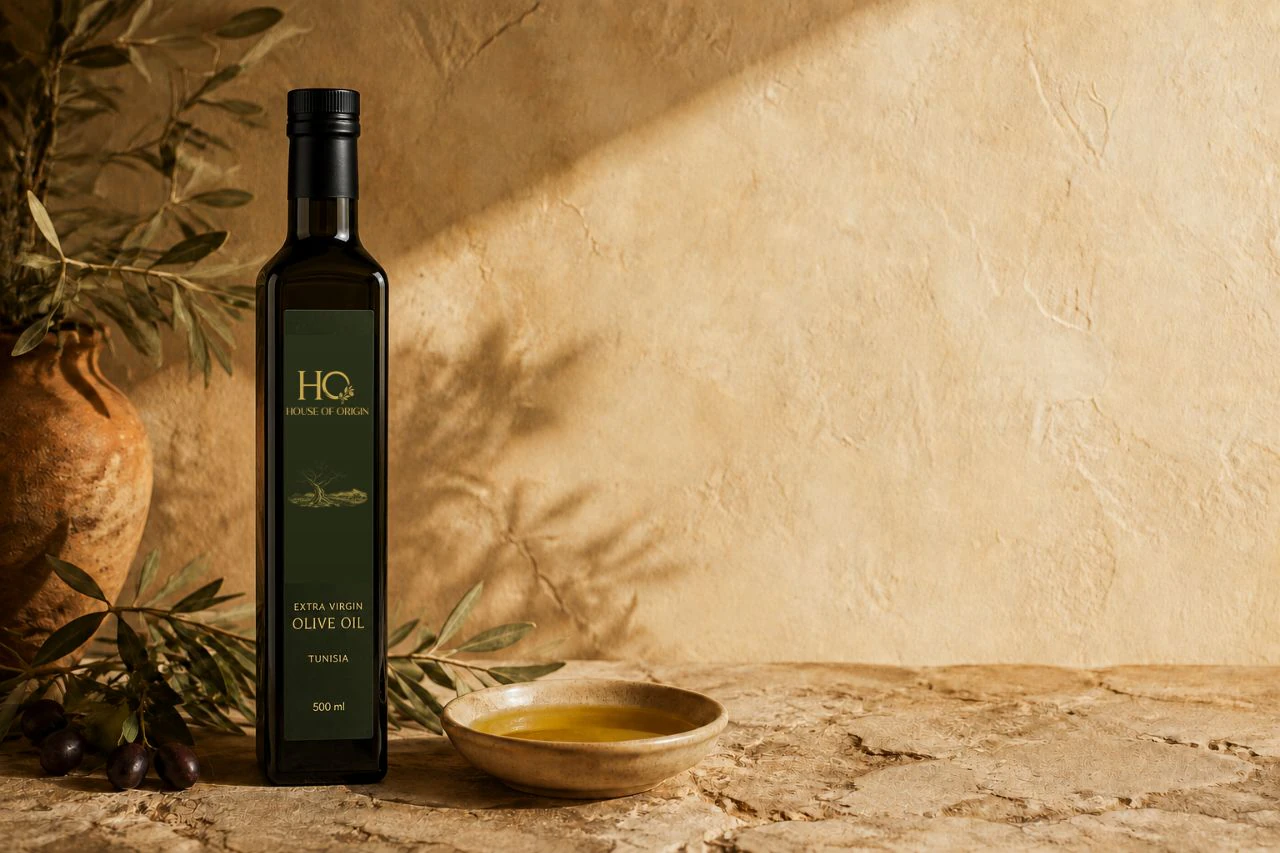
500 ml dark glass, minimal headspace, stored cool. Light and oxygen are the only things that undo the previous five steps.
Use it raw, and use it up.
An early-harvest oil is bought for its aromatics, and heat is what destroys them. Almost everything good you can do with this bottle happens off the stove.
Peppery bitterness is a sign of a young, polyphenol-rich oil, not a fault. It settles over the months as the oil ages.
Be first when the bottles arrive.
Retail allocation is small in the first release. Tell us what you need and we will write before it is announced publicly.
Hotels, restaurants and retailers should also see the wholesale terms for formats, minimums and lead times.