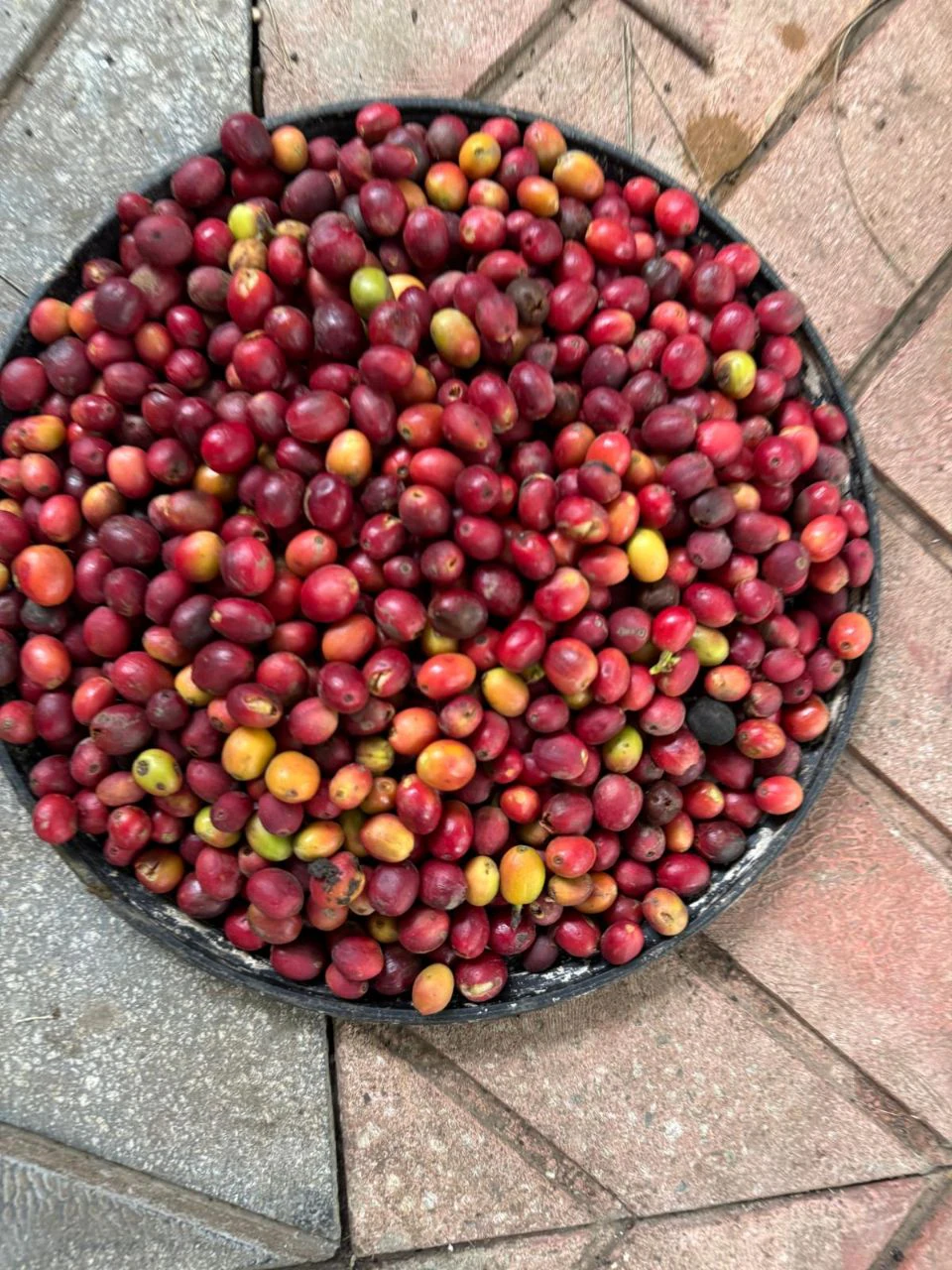
The birthplace of coffee.
Eight highland origins between 1,400 and 2,200 metres, still growing the landraces the rest of the world was planted from.
Eight origins, one house.
Select a region. Altitude, character and cup notes follow. These are the origins we source from — the specific station is named on the lot.
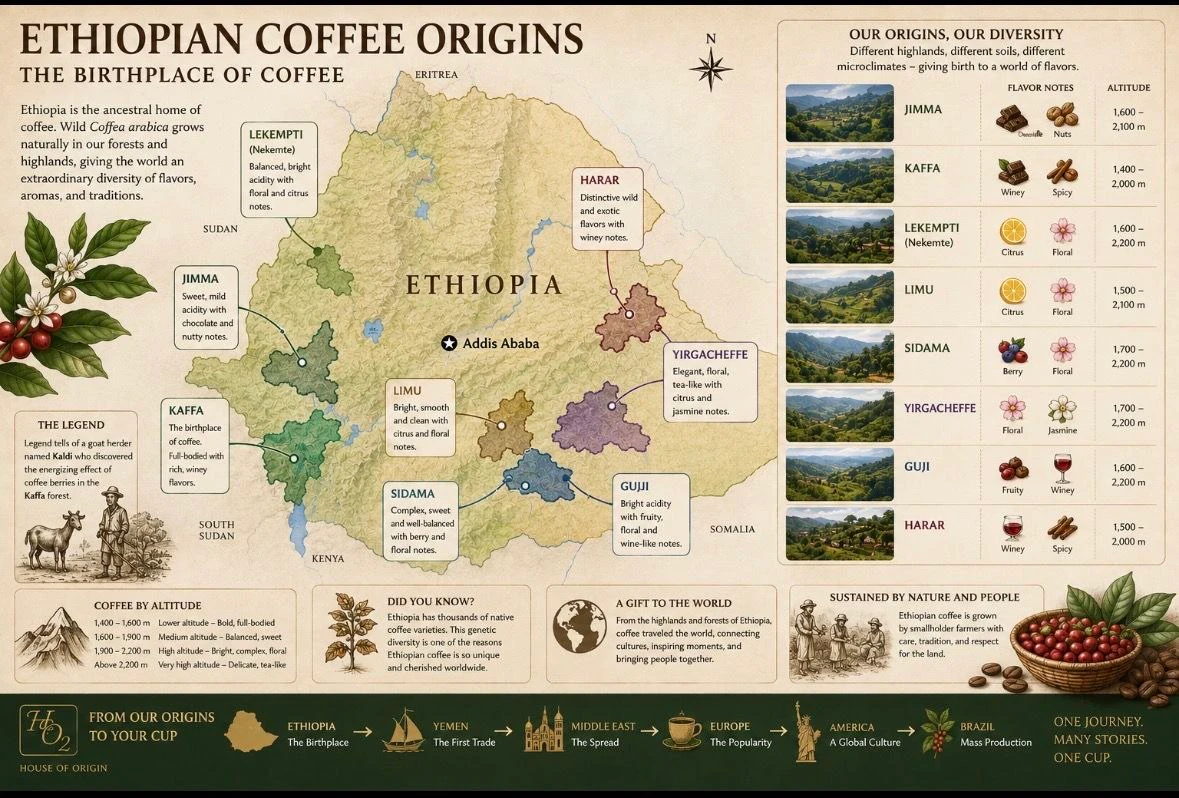
Altitude is not a boast. It is a growing condition.
Cool nights, slow cherries.
Higher ground means colder nights. The cherry ripens more slowly, holds its acid, and builds finer aromatics. That is the whole mechanism behind the word “highland”.
Altitude is recorded per lot, as a range for the station's catchment rather than a single flattering number.
The flavour wheel.
Start in the centre, move outward, and name what you taste with more precision. Select a family to read what it means in an Ethiopian cup.
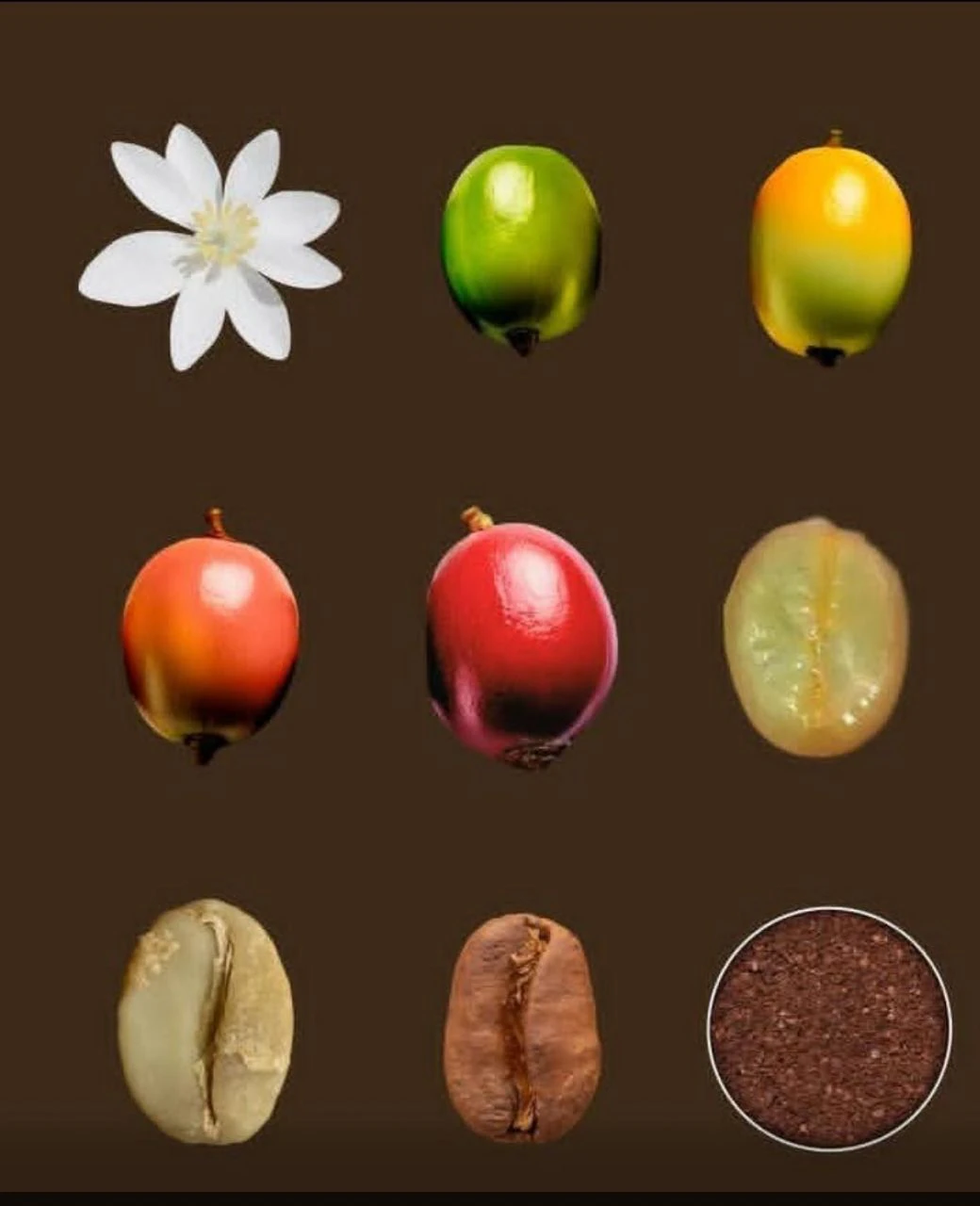
Nine states of one cherry.
Blossom, green, yellow, orange, ripe red, the seed in its mucilage, the dried green bean, the roast, the grind. Flavour is decided at every one of these nine points.
Three of them are choices rather than stages. Washed removes the fruit before drying and gives clarity. Natural dries the cherry whole and pushes sweetness and fruit. Honey leaves part of the mucilage on and sits between the two. The method is recorded on the lot because it changes the cup more than the region does.
Read the journalThe coffee ceremony.
In Ethiopia coffee is not a product category, it is a way of receiving people. Green beans are roasted in the room, ground by hand, and brewed in a clay jebena. It takes an hour or more, and that is the point.
Abol
The first pour, strongest of the three. Grass is spread, incense is lit, and the roast is carried around the room so the smoke is shared before the coffee is.
Tona
The second pour, from the same grounds. Lighter, longer, and the round where conversation actually happens.
Baraka
The third pour. The name means blessing — leaving before it is served is the one real discourtesy.
The ceremony is also a quality control system. Beans are inspected, washed, roasted and tasted in front of the people who will drink them — public, unhurried and hard to fake. It is the standard this house was named after.
What every bag will tell you.
This is the full field list each coffee carries — the same eleven lines for every lot, whether or not they flatter it. Fields marked “confirmed at launch” are waiting on a signed agreement or a laboratory result, not on copywriting.
Ethiopian Coffee · Forest
Ethiopian Coffee · Cream
From Ethiopia to the world — and back to the table.
Six centuries of trade that began on these slopes, and ends, for us, back where it started.
Named regions. Recorded processing. Published scores.
Coffee for cafés, roasters and retailers.
Retail and wholesale formats, sample policy, lead times and export documentation are set out on the wholesale page. Green coffee is available by contract, by harvest window.